
Tally is one of the most important software products in Indian business.
For accounts teams, it is familiar, fast, and reliable. It handles ledgers, vouchers, GST, invoices, payments, and financial reporting better than most generic tools a small business could assemble on its own.
So the problem is not that Tally is bad.
The problem is that many manufacturers expect Tally to answer questions it was never designed to answer.
Accounting software tells you what was recorded financially. A factory also needs to know what is happening operationally.
Those are different questions.
The Core Difference
Tally is strong at answering:
- what was invoiced
- what was purchased
- who owes money
- what tax was recorded
- what payment was made
- what ledger balance exists
A factory owner also needs answers like:
- which order is stuck in production
- which material is short for tomorrow's batch
- which vendor delay will stop dispatch
- which batch failed QC
- which customer change was approved
- which finished goods are ready but not billed
Those answers usually do not live cleanly in accounting software.
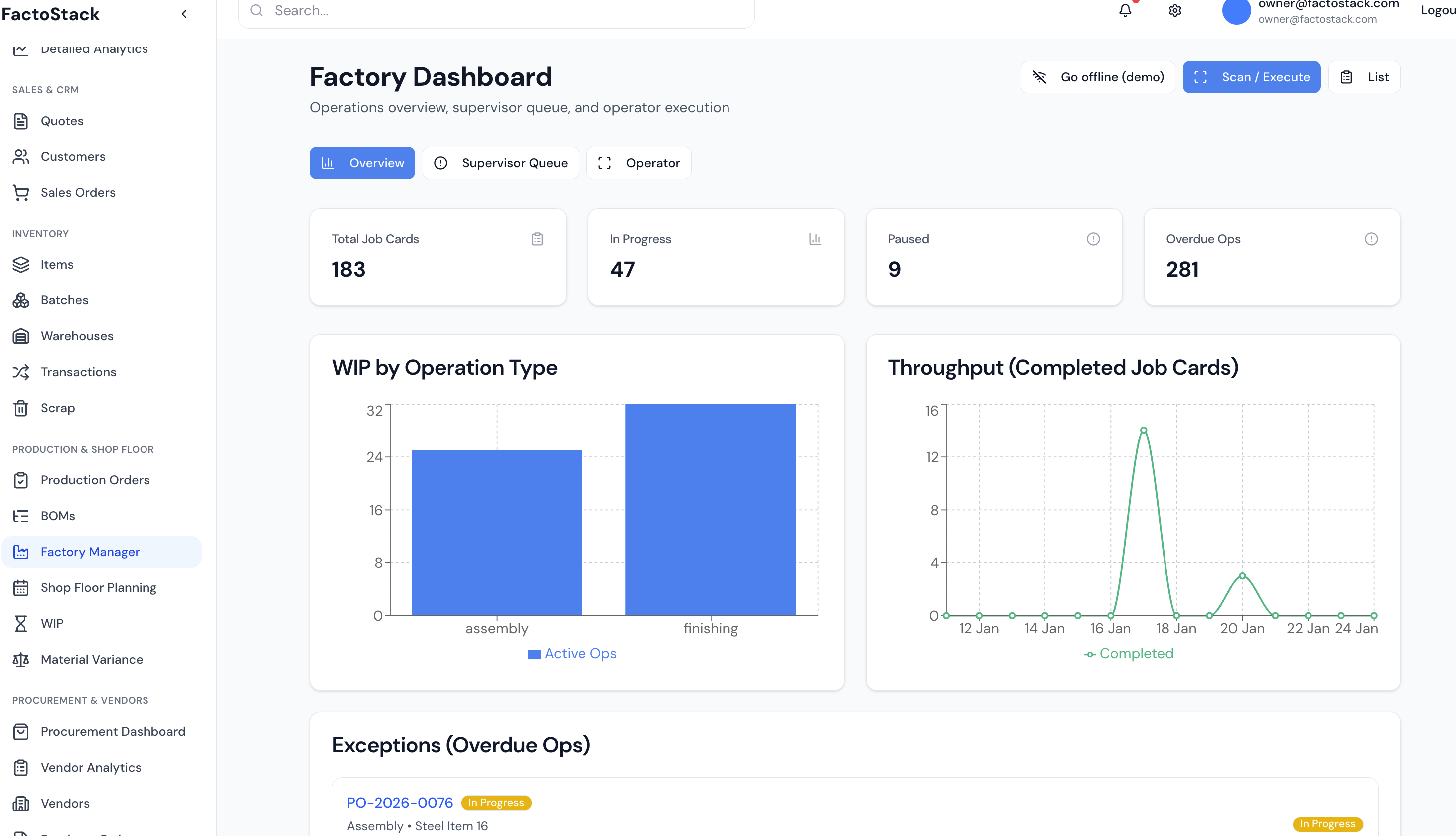
What Tally Does Not Tell You
1. Whether an order can actually be produced
An accepted sales order is not enough.
Before production starts, the team needs to know:
- whether the BOM is ready
- whether raw material is available
- whether packaging is available
- whether machines or labour are planned
- whether any customer specification changed
Tally may show stock and invoices. It usually does not run the full readiness check for production.
2. Where WIP is stuck
Work in progress is one of the hardest areas for MSMEs to control.
If a job is halfway through cutting, mixing, stitching, packing, coating, machining, or assembly, the accounts entry may not tell the owner where it is stuck.
Useful WIP questions include:
- which stage is delayed
- who owns the next action
- how much quantity is completed
- how much is rejected
- what is the expected completion date
Without this view, the factory discovers delays only when dispatch becomes urgent.
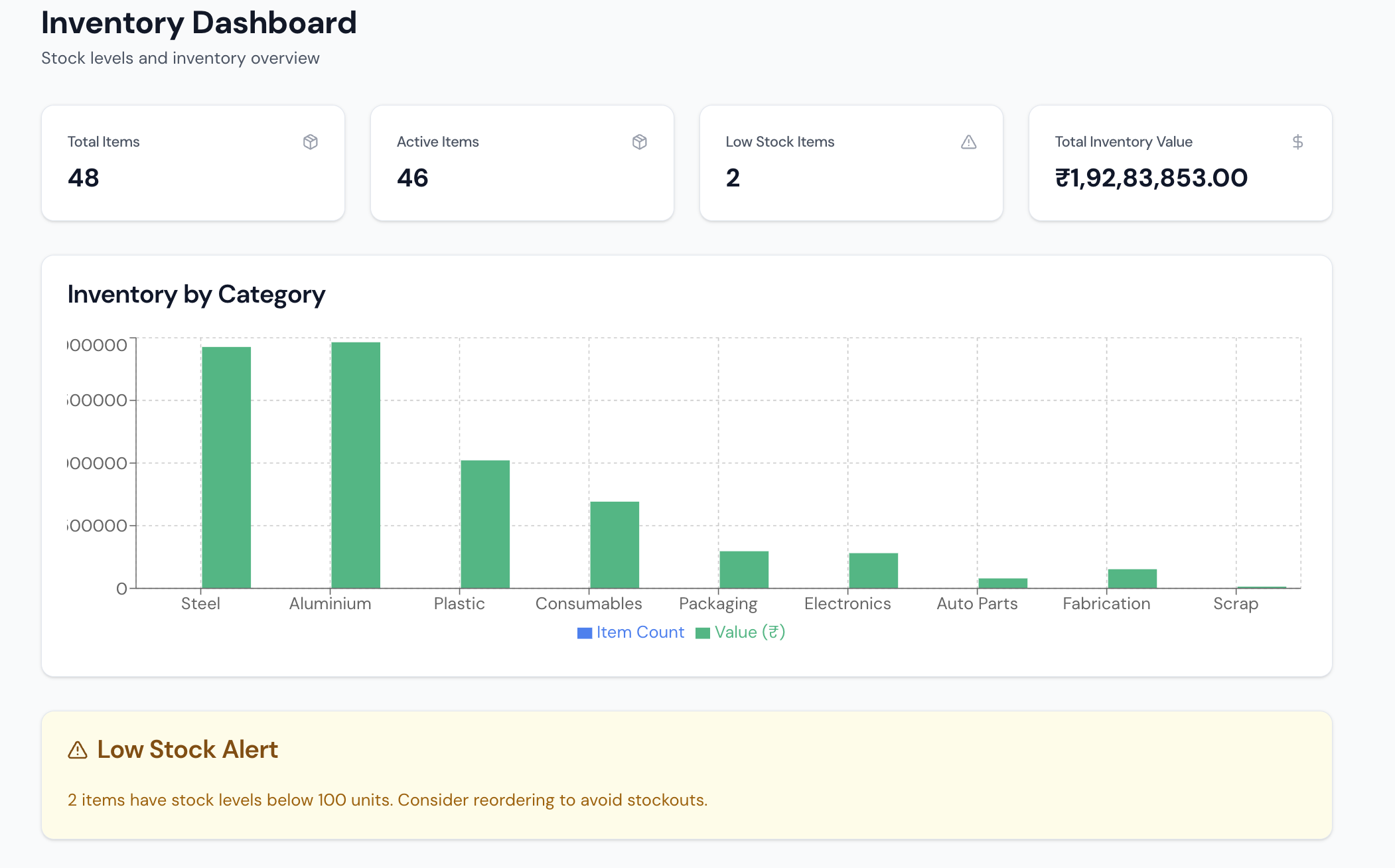
3. Whether stock is usable
Accounting stock and usable stock are not always the same.
Material may be:
- physically received but not inspected
- accepted but not placed in the right location
- expired or damaged
- blocked for another order
- issued to production but not consumed correctly
- returned from production as scrap
If the team looks only at a stock number, they may plan production against inventory that cannot actually be used.
4. Why dispatch is delayed
Dispatch delay may look like a sales or logistics issue, but the root cause can be anywhere:
- production not completed
- QC hold
- packing material shortage
- payment hold
- wrong shipping address
- transport not booked
- invoice not prepared
Tally can help create the invoice. It usually does not show the full pre-dispatch workflow.
5. Which customers create operational pressure
Revenue alone does not tell the whole story.
One customer may buy regularly but:
- change specifications often
- delay approvals
- demand urgent dispatch
- pay late
- reject material frequently
- require special packing
Another customer may buy less but run smoothly.
Factory software should help compare not only sales value, but operational load and payment behaviour.
6. Which vendors are quietly hurting production
Vendor ledgers show payable amounts. They do not always show supplier reliability.
Manufacturers need to track:
- promised date versus actual date
- partial supply
- rejection rate
- price changes
- response time
- material quality issues
- dependency on single vendors
This is procurement intelligence, not only accounting.
7. Whether profit is leaking inside operations
Profit does not disappear only at the invoice level.
It leaks through:
- excess material consumption
- rework
- rejection
- overtime
- urgent freight
- repeated setup changes
- unplanned purchase rates
- slow collections
If these operational events are not captured, the final accounts show the result but not the cause.
Why Excel Appears Beside Tally
Factories do not use Excel because they love maintaining multiple files.
They use Excel because someone needs to track what Tally does not:
- daily production plan
- order status
- material requirement
- vendor follow-up
- packing list
- dispatch tracker
- customer commitment
- payment follow-up notes
Excel becomes the unofficial operations system. WhatsApp becomes the unofficial workflow engine. Tally remains the official accounting system.
That setup works for a while, then breaks when volume increases.
A Better Division of Work
The cleanest approach for many MSMEs is not "Tally versus ERP".
It is:
- use factory software for operational control
- use Tally or accounting software for statutory accounting where needed
The operational system should capture the event when it happens:
- customer order confirmed
- material requirement calculated
- PO sent to vendor
- GRN recorded
- QC accepted or rejected
- production started
- production completed
- dispatch planned
- invoice raised
- payment followed up
Then accounting gets cleaner data because the operating record is already structured.
Order
Sales confirms customer requirement, delivery date, and specifications.
Plan
Production checks BOM, material availability, and shop-floor capacity.
Execute
Teams record issue, consumption, output, QC, packing, and dispatch status.
Account
Invoices, payments, GST, and ledgers stay clean because the operational record is complete.
Questions Every Manufacturer Should Ask
If your factory runs on Tally plus Excel, ask these questions:
- Can I see every open order and its current stage?
- Can I see which material shortage will affect production this week?
- Can I see WIP by order or batch?
- Can I see accepted versus rejected quantity?
- Can I see finished goods ready for dispatch?
- Can I see customer payment follow-up linked to invoices?
- Can I see vendor delays before they become production delays?
If the answer is no, the problem is not accounting. The problem is operating visibility.
Where FactoStack Fits
FactoStack is built as the operating layer for manufacturers: sales orders, inventory, procurement, production, QC, dispatch, invoices, payments, and reporting in one workflow.
You can still keep accounting discipline. The point is to stop forcing accounting software to behave like a factory control room.
Manufacturing Operations Beyond Tally
Use Tally where it is strong, and run production, inventory, procurement, dispatch, and payment follow-up in a system designed for factory operations.
Related Guides
- 5 signs your factory has outgrown Tally
- Tally limitations for manufacturers
- ERP vs Tally for small manufacturers
Frequently Asked Questions
Do Not Blame Tally for a Factory Problem
Tally should not be blamed for failing to solve every manufacturing workflow.
The better question is simpler: which system owns the factory's operational truth before the accounting entry happens?
Once that is clear, accounts gets cleaner, operations gets faster, and the owner stops depending on scattered follow-up to understand the business.

Written by
Sudharsan GS
Building FactoStack with Indian MSME manufacturers across inventory, production, dispatch, GST, and Tally workflows.