Many factories think procurement is under control because they issue purchase orders.
It usually is not.
A PO only tells you what was asked from the vendor. It does not tell you:
- whether the vendor accepted the date
- whether the full quantity arrived
- whether quality passed
- whether the bill matched
- whether payment is pending
That gap is exactly where late production, repeated phone calls, and supplier disputes come from.
The Four Records That Need to Stay Connected
1. Purchase Order
The PO is the commercial commitment: item, quantity, rate, tax, delivery date, and terms.
2. Goods Receipt Note
The GRN is the physical reality: what actually arrived at the gate or store.
3. Quality decision
Received material may be accepted, rejected, or held. If that status is not captured, inventory gets overstated and payment follow-up becomes messy.
4. Payment status
Even when procurement and accounts are separate teams, the buying team still needs to know whether the vendor is unpaid or disputed before depending on them for the next order.
These are not four separate stories. They are one workflow.
What Happens in Most Small Factories
The standard fragmented setup looks like this:
- PO sent from Excel or WhatsApp PDF
- supplier promises a date on call
- material arrives and stores writes it in a notebook
- QC informs purchase verbally if there is a problem
- vendor sends invoice on email
- accounts enters the bill in Tally
- payment follow-up happens by phone
Every team knows one part. No team sees the full picture.
That is why simple questions become difficult:
- how much of this PO is still pending
- did we receive the balance quantity
- was any lot rejected
- has the vendor already been paid partly
- which open POs are blocking this week's production
Why PO Alone Is Not Enough
A PO assumes intent. A GRN records execution.
If you order 1,000 units and receive 720 units, the factory needs to know that the remaining 280 units are still open. If only 650 of the 720 pass inspection, the factory needs to know the usable quantity is 650, not 720 and definitely not 1,000.
This sounds obvious, but many MSMEs still update inventory from the bill, not from the receipt and acceptance event. That is how stock accuracy breaks.
A Better Procurement Tracking Flow
The clean flow should look like this:
- create PO with promised date
- track vendor confirmation
- receive material against PO
- record partial or full GRN
- mark accepted, rejected, or held quantity
- update usable inventory
- match bill against PO and receipt
- track payment status
Once these are connected, procurement stops being memory-driven.
PO raised
The ordered quantity, commercial terms, and promised date become the base record.
Vendor follow-up
Purchase tracks whether the supplier confirmed quantity and date.
Material received
Stores records what physically arrived, even if it is only part of the PO.
Inspection
QC marks accepted, rejected, or held quantity before stock becomes usable.
Bill match
Accounts checks invoice quantity, rate, and tax against PO and receipt.
Payment visibility
The team sees what is due, paid, disputed, or overdue vendor-wise.
What to Track on Every Purchase Order
At minimum, each PO should show:
- PO number and date
- vendor
- item and specification
- ordered quantity
- rate and tax
- promised delivery date
- received quantity
- accepted quantity
- rejected or held quantity
- pending quantity
- bill status
- payment status
That list is not overkill. It is the minimum operating context for procurement.
Why This Matters to Production
Procurement data is not just for the buying team.
Production depends on it to answer:
- can this batch start
- which material is still pending
- whether the incoming lot is usable
- whether an alternate vendor is needed
Without this visibility, production gets surprised by shortages that were actually visible days earlier.
Where Tally Helps and Where It Stops
Tally is useful once a purchase bill and payment need to be accounted for.
It is not built to be the daily control room for:
- PO confirmation
- partial receipts
- warehouse-level pending inward
- accepted versus rejected quantity
- vendor-wise operational follow-up
That is why many factories end up doing procurement operations outside Tally, then copying the final bill into accounts.
Vendor Payment Visibility Is an Operations Issue Too
Payment status affects supply continuity.
If a supplier has old dues pending, the next urgent order may not move even if the PO is approved. Buyers should not discover that only after repeated calls.
That does not mean purchase owns accounts. It means purchase needs enough visibility to make better vendor decisions.
Useful statuses include:
- bill not received
- bill under verification
- approved for payment
- part paid
- fully paid
- overdue
- on hold due to dispute
Where FactoStack Fits
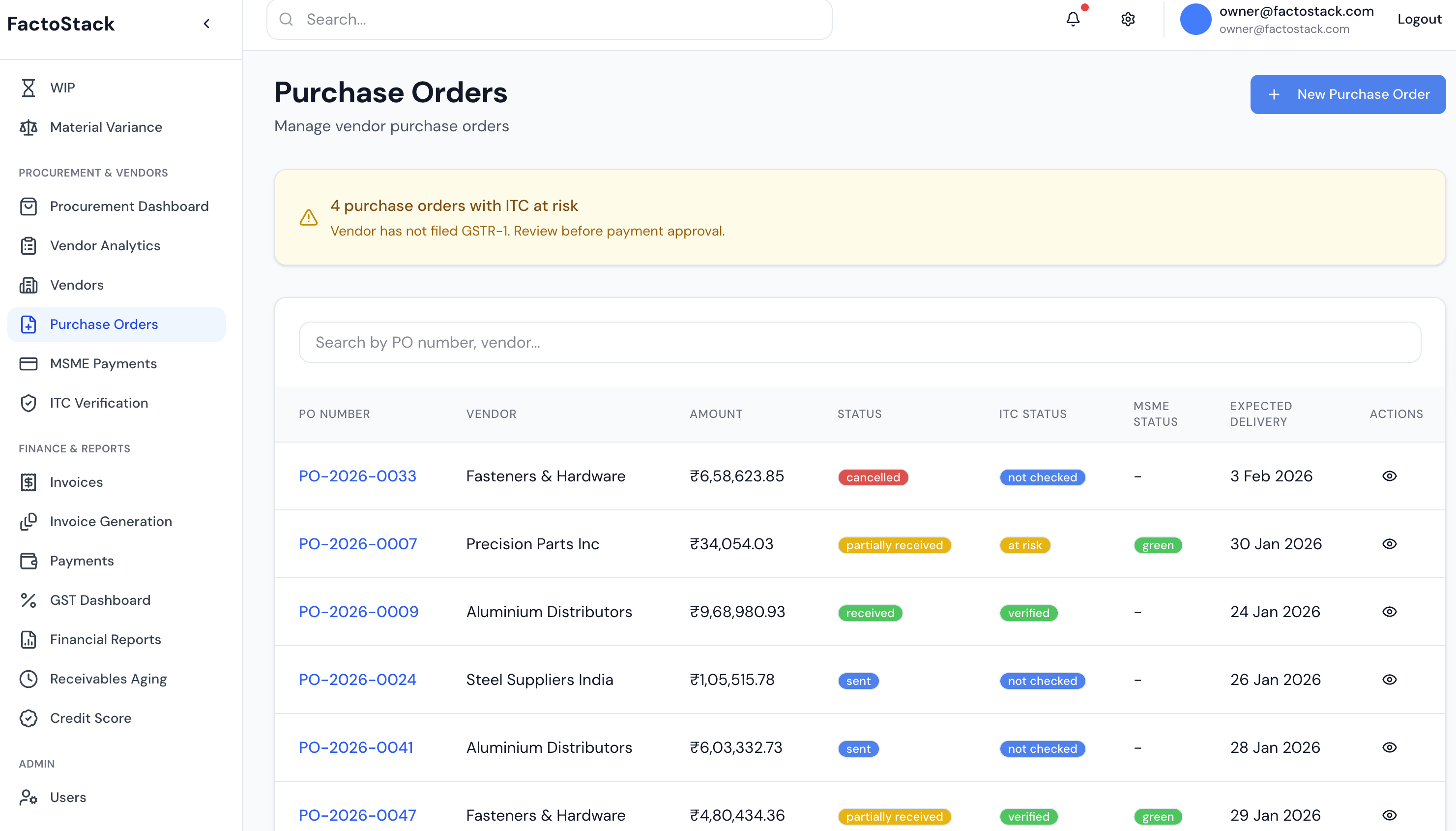
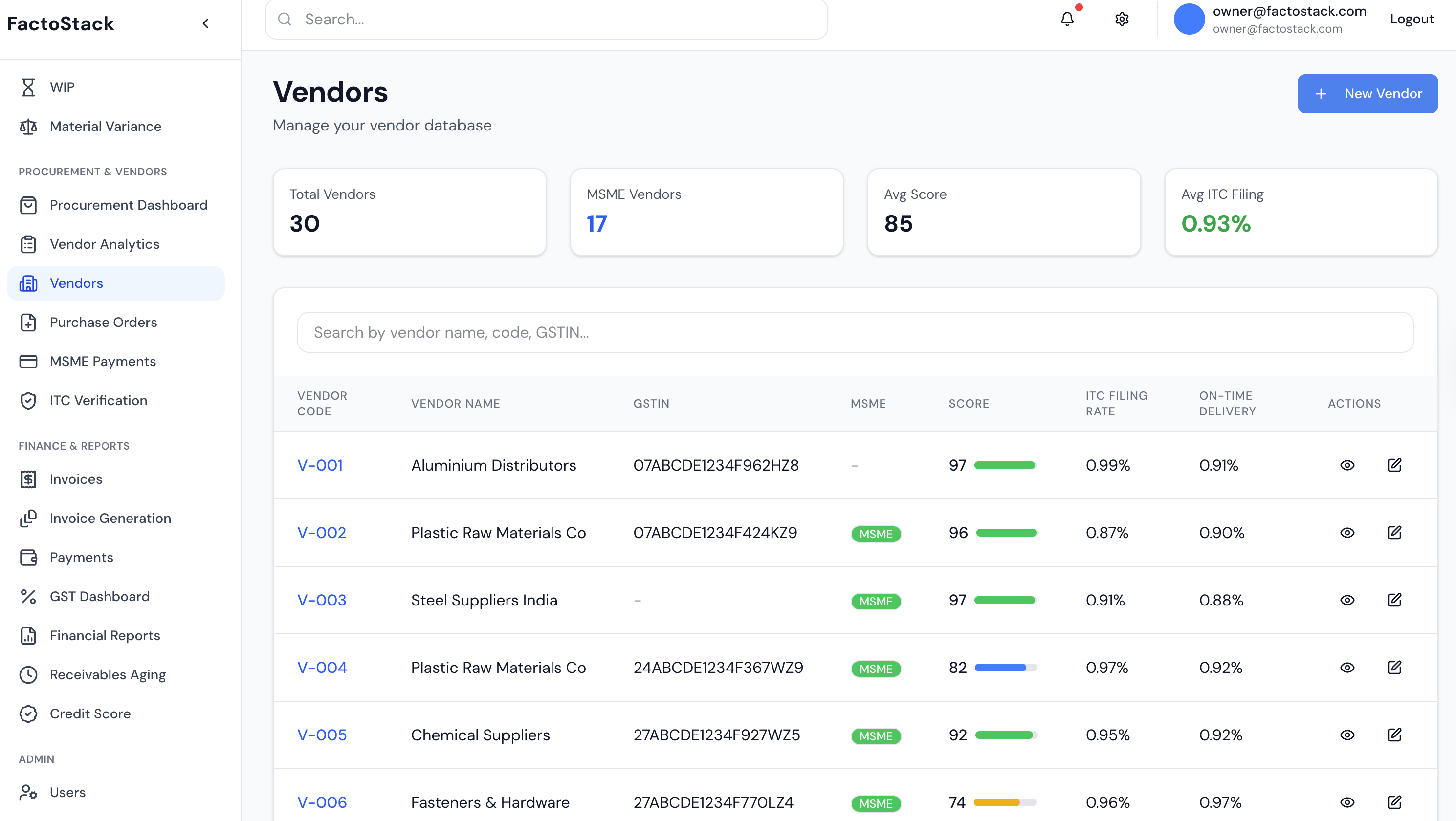
FactoStack keeps PO, GRN, inventory update, and vendor follow-up in one operational flow. Accounts can still complete the financial posting separately, including in Tally if needed.
That gives the team one answerable record instead of five disconnected ones.
Procurement and Vendor Management
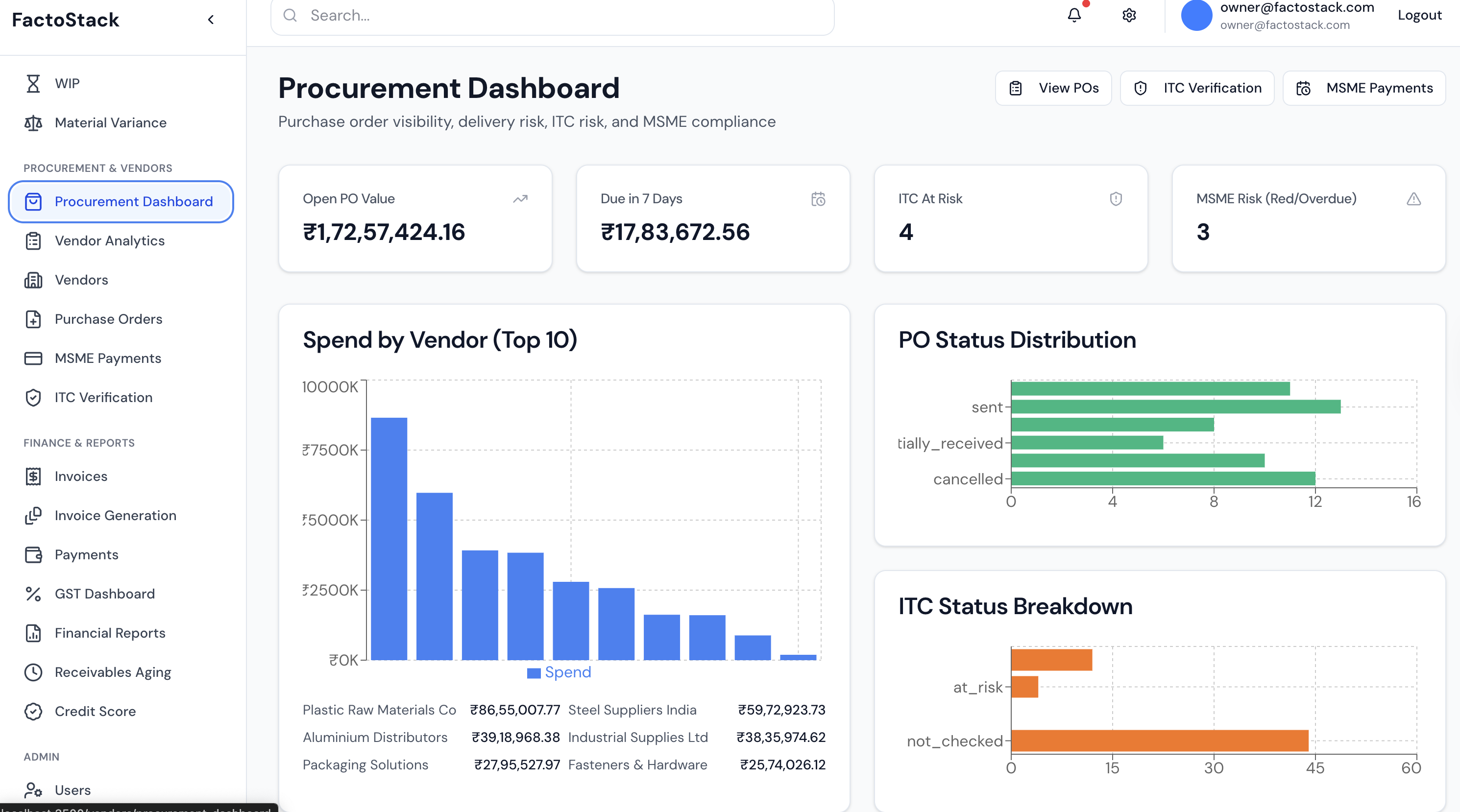
Track ordered, received, accepted, pending, and vendor follow-up in one manufacturing workflow.
Related Guides
- How to run MRP without an SAP budget
- How Indian manufacturers can reduce WhatsApp-led chaos
- Vendor portal benefits for manufacturers
Frequently Asked Questions
Control Procurement After the PO, Not Just Before It
If your team is still cross-checking Excel, registers, Tally, and phone calls to understand one vendor order, the process is leaking time and accuracy.

Written by
Sudharsan GS
Building FactoStack with Indian MSME manufacturers across inventory, production, dispatch, GST, and Tally workflows.