Most manufacturers think of creditworthiness as something decided by banks.
That is only partly true.
Banks, NBFCs, large buyers, marketplaces, and even suppliers all ask the same basic question in different ways:
Can this factory be trusted to operate predictably?
They may not use those exact words. They may ask for bank statements, GST returns, financials, invoices, purchase orders, stock statements, debtor reports, or customer references. But underneath all of it, they are trying to judge the same thing: whether your business has enough reliable activity, control, and discipline to deserve more credit.
That is why your factory data is becoming a kind of credit score.
Not the official bureau score alone. A practical operating score.
What Lenders and Partners Are Really Looking For
When someone evaluates a manufacturing business, they are not only looking at last year's profit.
They want signals like:
- whether sales are recurring or random
- whether customers pay on time
- whether inventory is moving or stuck
- whether purchase commitments match production demand
- whether dispatches happen as promised
- whether the owner can explain cash gaps clearly
These signals usually exist inside the business already. The problem is that they are scattered across Tally, Excel, WhatsApp, paper registers, emails, and memory.
If the data is scattered, the business looks riskier than it may actually be.
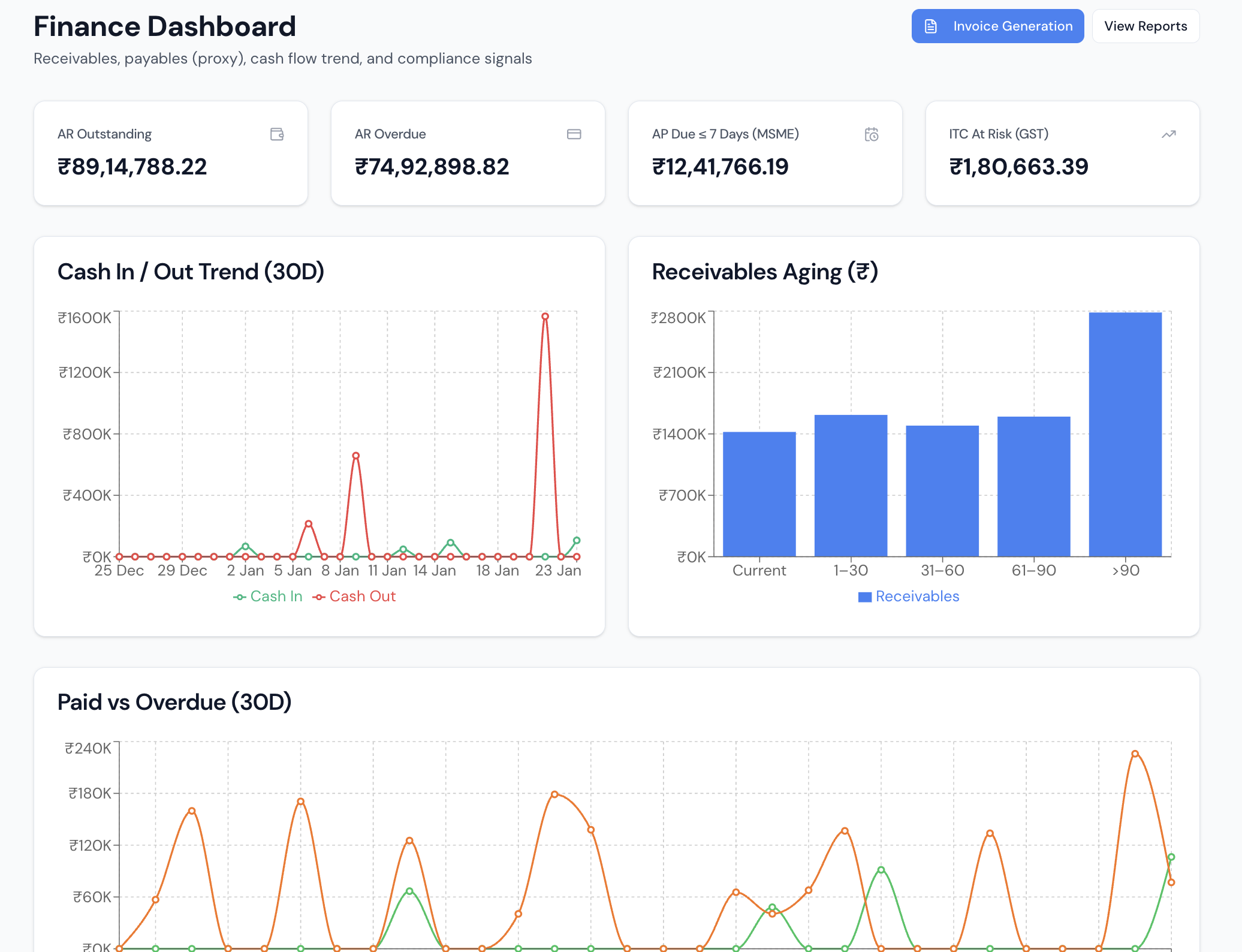
Accounting Data Is Important, But It Is Not the Whole Story
Tally and accounting reports are useful. They show invoices, payments, GST, ledgers, and statutory records.
But factory health is also visible in operational data:
- open sales orders
- pending production
- material shortages
- finished goods waiting for dispatch
- overdue purchase receipts
- customer-wise payment behaviour
- vendor dependency
- rejected or reworked batches
These are the things that explain why cash is tight before the bank balance shows the final pain.
If a lender asks why working capital is stretched, an accounting report may show debtors. A factory operating system can show the story behind those debtors: which orders were delayed, which customers are slow, which dispatches are stuck, and which materials blocked production.
The Five Factory Data Signals That Matter
1. Order reliability
A factory with clean sales order history can show demand more clearly.
Useful questions include:
- how many orders are repeat orders
- which customers order every month
- how much confirmed demand is pending
- how much revenue is expected from open orders
- which orders are delayed and why
This helps prove that the business has momentum, not just past invoices.
2. Receivables discipline
Debtor ageing is one of the clearest credit signals in an MSME.
But the useful view is not just "who owes money". The better view is:
- invoice date
- due date
- promised payment date
- follow-up history
- dispute reason
- customer-wise delay pattern
If your team can show that receivables are tracked actively, the business looks more controlled.
3. Inventory accuracy
Inventory is often the largest hidden working capital block in a factory.
If stock records are unreliable, no one can confidently answer:
- how much raw material is usable
- how much finished stock is ready
- what is slow-moving
- what is blocked in WIP
- what must be bought this week
Poor inventory data makes the business look less bankable because the balance sheet number cannot be trusted operationally.
4. Purchase and vendor discipline
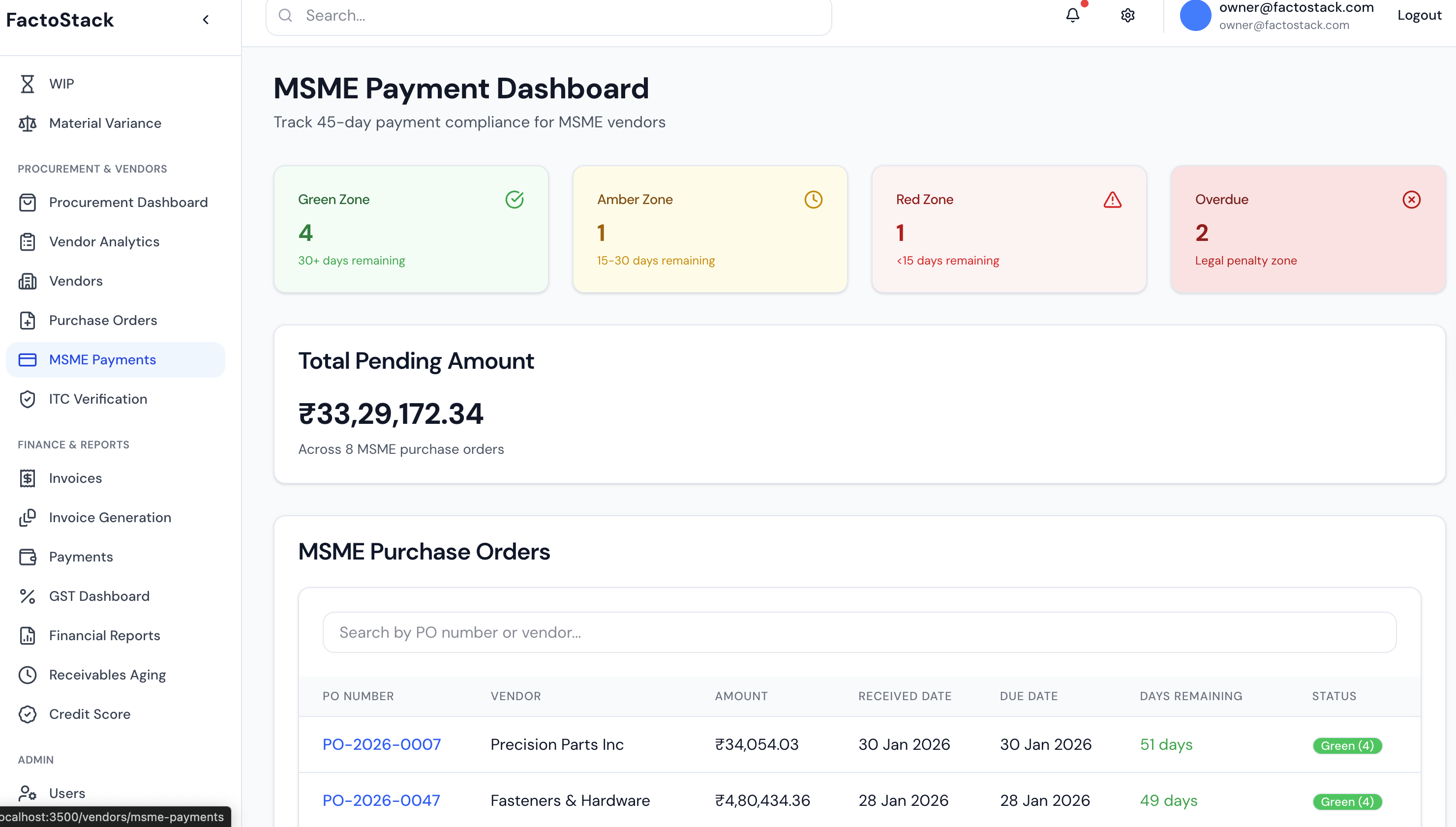
A factory that tracks purchase orders, GRNs, and vendor commitments can explain supply risk better.
That matters because delayed material turns into delayed production, delayed dispatch, and delayed collection.
Strong vendor data shows:
- which vendors are dependable
- which materials have long lead times
- which purchases are overdue
- what has arrived partially
- where quality rejection is recurring
This is not just procurement hygiene. It is credit hygiene.
5. Production throughput
Manufacturing businesses are not trading businesses. They create value through conversion.
So production data matters:
- planned versus actual output
- batch completion time
- WIP stuck at each stage
- rejection and rework
- machine or labour bottlenecks
- dispatch readiness
If production execution is invisible, future sales projections become weaker. If production execution is measured, future cash flow becomes easier to defend.
Why Scattered Data Hurts Credit Conversations
Imagine a lender asks for a working capital explanation.
The owner asks accounts for debtor ageing, purchase for pending material, production for order status, and stores for stock. Each team sends a different file. Some numbers do not match. Some updates are from last week. Some commitments are in WhatsApp.
Even if the business is fundamentally good, it looks messy.
That mess creates three problems:
- decisions take longer
- credit limits stay conservative
- owners have to personally explain every gap
Clean data builds the trust that credit decisions run on. Messy data almost always weakens it.
The Better Way to Think About Factory Data
Factory software should not be treated only as a tool for internal efficiency.
It should create an operating record that can answer:
- what was ordered
- what was produced
- what was dispatched
- what was invoiced
- what was collected
- what is still pending
- what risk is visible today
When these answers come from one system, the business becomes easier to manage and easier to explain.
Customer demand
Sales orders show confirmed and expected revenue.
Material readiness
Inventory and purchase records show whether production can start.
Production execution
Job cards and production orders show what is moving, delayed, or completed.
Dispatch and invoice
Finished goods become billable revenue instead of invisible stock.
Collection
Payment follow-up turns invoices into cash and creates a clear receivables trail.
What to Clean Up First
Do not try to digitise every corner of the factory at once.
Start with the data that has the highest credit and cash impact:
- customer master and customer-wise dues
- open sales orders and dispatch status
- invoice due dates and collection follow-up
- raw material and finished goods stock
- purchase orders and pending receipts
- production orders and WIP status
Once these are reliable, deeper reporting becomes useful.
Where FactoStack Fits
FactoStack helps manufacturers connect sales, production, inventory, procurement, dispatch, invoicing, and payments into one operating record. That record helps owners see the business clearly and explain it better during working capital conversations.
Operating Data for MSME Manufacturers
Connect orders, inventory, production, procurement, invoices, and payments so your factory's business health is visible in one place.
Related Guides
- Debtor aging report for manufacturers
- How to track purchase orders, GRNs, and vendor payments
- Why manufacturers run on three disconnected tools
Frequently Asked Questions
Your Data Should Defend Your Business
A growing factory should not depend only on the owner's memory to prove that it is healthy.
The stronger habit is simple: turn daily operations into reliable business evidence. That evidence helps you run better today and makes future credit conversations easier.

Written by
Sudharsan GS
Building FactoStack with Indian MSME manufacturers across inventory, production, dispatch, GST, and Tally workflows.