WhatsApp is probably the most important unofficial software in Indian manufacturing.
It is where:
- customers confirm changes
- sales shares quotes
- purchase follows up with suppliers
- supervisors ask for urgency
- dispatch shares vehicle details
- owners chase status
The reason is obvious: it is fast, universal, and already in everyone's hand.
The problem is that speed of communication is not the same thing as control of operations.
Why WhatsApp Feels Efficient
Compared to email or paper, WhatsApp removes friction.
- messages are instant
- photos and PDFs are easy to send
- customers respond quickly
- vendors are easier to chase
- internal teams use it without training
That makes it very effective as a communication layer.
It becomes expensive when it turns into the place where the factory actually runs.
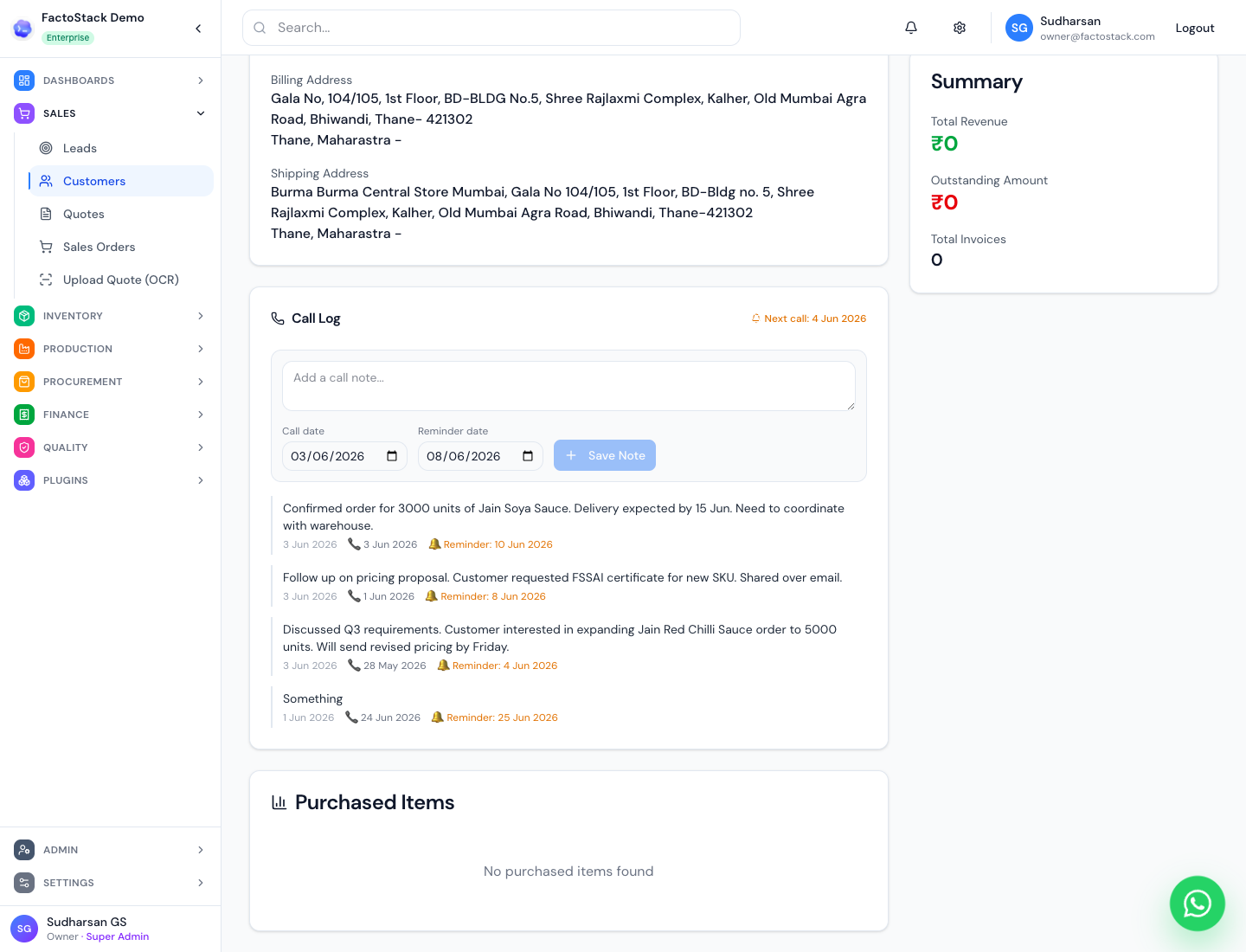
The Difference Between Communication and Control
Communication answers: "Did someone say this?"
Control answers:
- was the order officially changed
- did production receive the updated quantity
- did inventory reflect the new requirement
- did dispatch and invoicing pick the same version
WhatsApp is good at the first. Factories need the second.
The Seven Hidden Costs
1. Order revisions get lost in chat history
A customer may send:
- revised quantity
- changed delivery date
- updated artwork
- alternate shipping address
If that revision stays only in a chat, one team may act on it while another does not. The result is not just confusion. It is wrong production, wrong dispatch, or wrong invoice.
2. Production instructions become ambiguous
Messages like these are common:
- "Do this one urgently"
- "Use old size only"
- "Customer wants same as last time"
- "Hold the dispatch till payment confirmation"
These work when the sender and receiver share context. They fail when a second shift, another supervisor, or accounts needs to act on the same instruction later.
3. No audit trail for operational decisions
In a dispute, the factory needs to know:
- who approved the change
- when it was approved
- what exactly changed
- whether the team acted before or after the update
WhatsApp has conversation history, but not a clean business audit trail tied to the order, BOM, shipment, or invoice.
4. Priorities keep changing without visibility
Because WhatsApp is real-time, the loudest or latest message often wins.
That creates a factory where:
- planned work gets interrupted often
- urgent orders crowd out important ones
- production sequencing changes without trace
- people optimise for message pressure, not business priority
It feels responsive. Operationally, it is unstable.
5. Vendor follow-up stays personal, not institutional
One purchase executive may know the full vendor situation because they handled the calls and messages.
But the company record still remains weak:
- committed date may not be logged
- partial supply may not be visible to production
- alternate vendor decisions may not be recorded
- payment disputes may remain informal
When that employee is absent, the follow-up context disappears with them.
6. Rework becomes invisible in reporting
If a mistake happened because someone acted on an old message, it rarely gets reported that way.
The rework shows up as:
- customer complaint
- wrong batch
- urgent remake
- return
- dispatch delay
The root cause, a chat-led operating system, stays hidden.
7. Leadership gets trapped in constant coordination
Owners and operations heads end up spending hours every day forwarding, clarifying, escalating, and checking.
That is not strategic oversight. It is manual middleware.
Where WhatsApp Works Well
Used correctly, WhatsApp is still valuable for:
- quick alerts
- sharing photos and proofs
- customer convenience
- vendor nudges
- last-mile coordination
The key is that the official record should live elsewhere.
A Better Rule for Manufacturers
Use a simple rule:
WhatsApp can notify. The system must decide.
That means:
- customer message arrives on WhatsApp
- team updates the sales order or dispatch record
- production, inventory, procurement, and accounts now see the same change
This keeps the convenience of chat without allowing chat to become the database.
Customer or vendor message
The conversation starts in WhatsApp because it is convenient and fast.
Structured record update
The team updates the linked order, PO, dispatch, or invoice record in the system.
Shared visibility
Sales, production, purchase, stores, and accounts now see the same current version.
Execution
The factory acts on the recorded workflow, not on scattered chat memory.
What to Move Out of WhatsApp First
Do not try to change everything at once. Start by removing the highest-risk workflows from chat:
- sales order changes
- production planning priorities
- dispatch approval
- PO and GRN follow-up
- payment hold or release status
These are the changes most likely to create downstream errors.
Where FactoStack Fits
FactoStack gives manufacturers a shared operating record for orders, inventory, procurement, production, dispatch, and invoicing. WhatsApp can still be used for communication, but not as the place where the factory's truth lives.
Structured Factory Workflows Beyond Chat
Keep communication fast, but move order changes, production tracking, inventory updates, and dispatch control into one manufacturing system.
Related Guides
- Why manufacturers run on three disconnected tools
- What Indian manufacturers actually need from an ERP
- How to track purchase orders, GRNs, and vendor payments
Frequently Asked Questions
Keep WhatsApp as a Channel, Not the Control Room
Factories do not become more disciplined by banning communication tools. They improve by making sure important operational decisions end up in a shared system instead of remaining inside chat threads.

Written by
Sudharsan GS
Building FactoStack with Indian MSME manufacturers across inventory, production, dispatch, GST, and Tally workflows.